EconomyAnalysis
Fed's October meeting: inflation at 3.7%, most officials expect another rate increase
The September minutes, a 0.6% monthly rise in consumer prices and payroll growth of just 29,000 frame the Federal Reserve's first meeting since it raised rates.
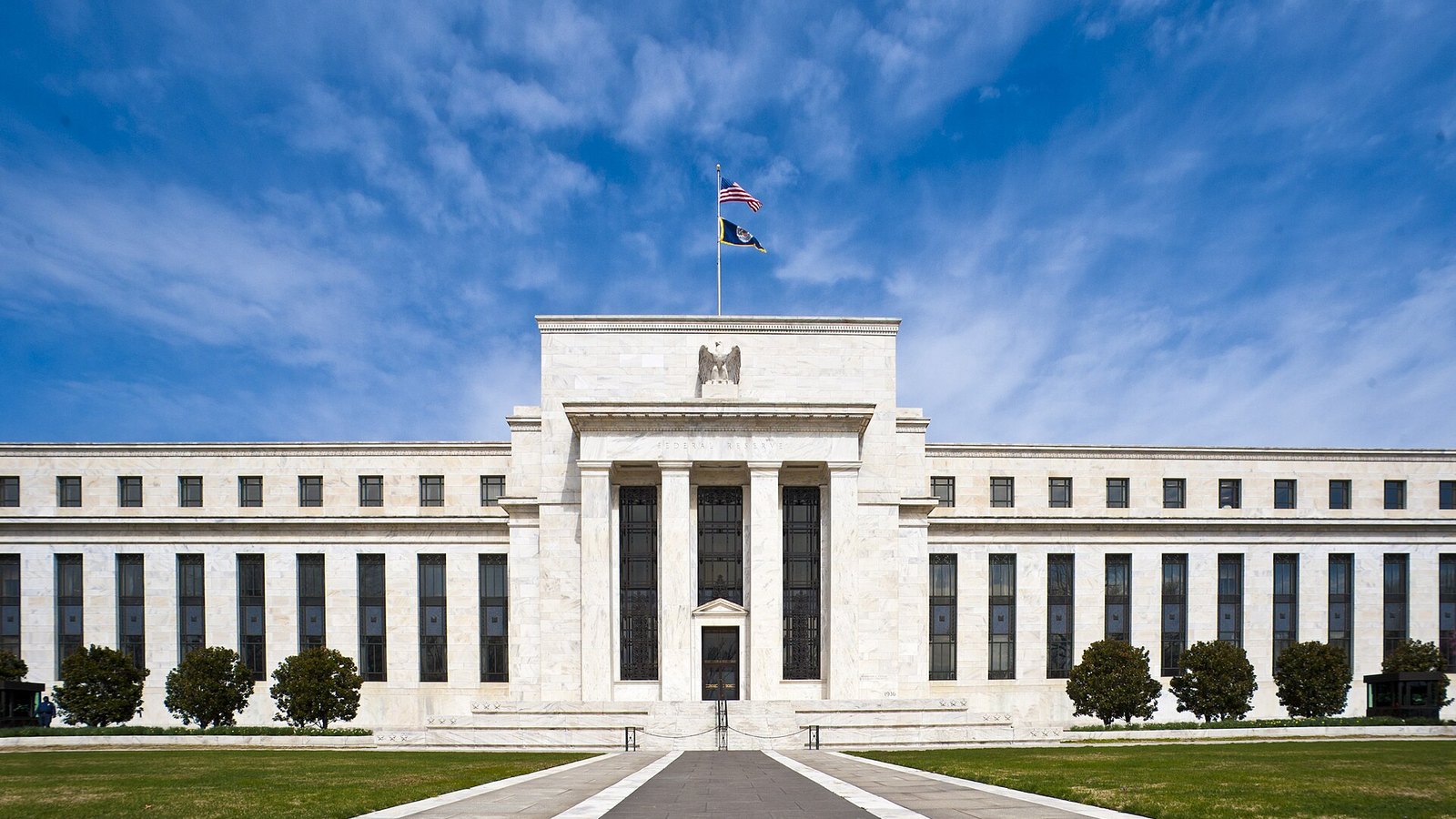
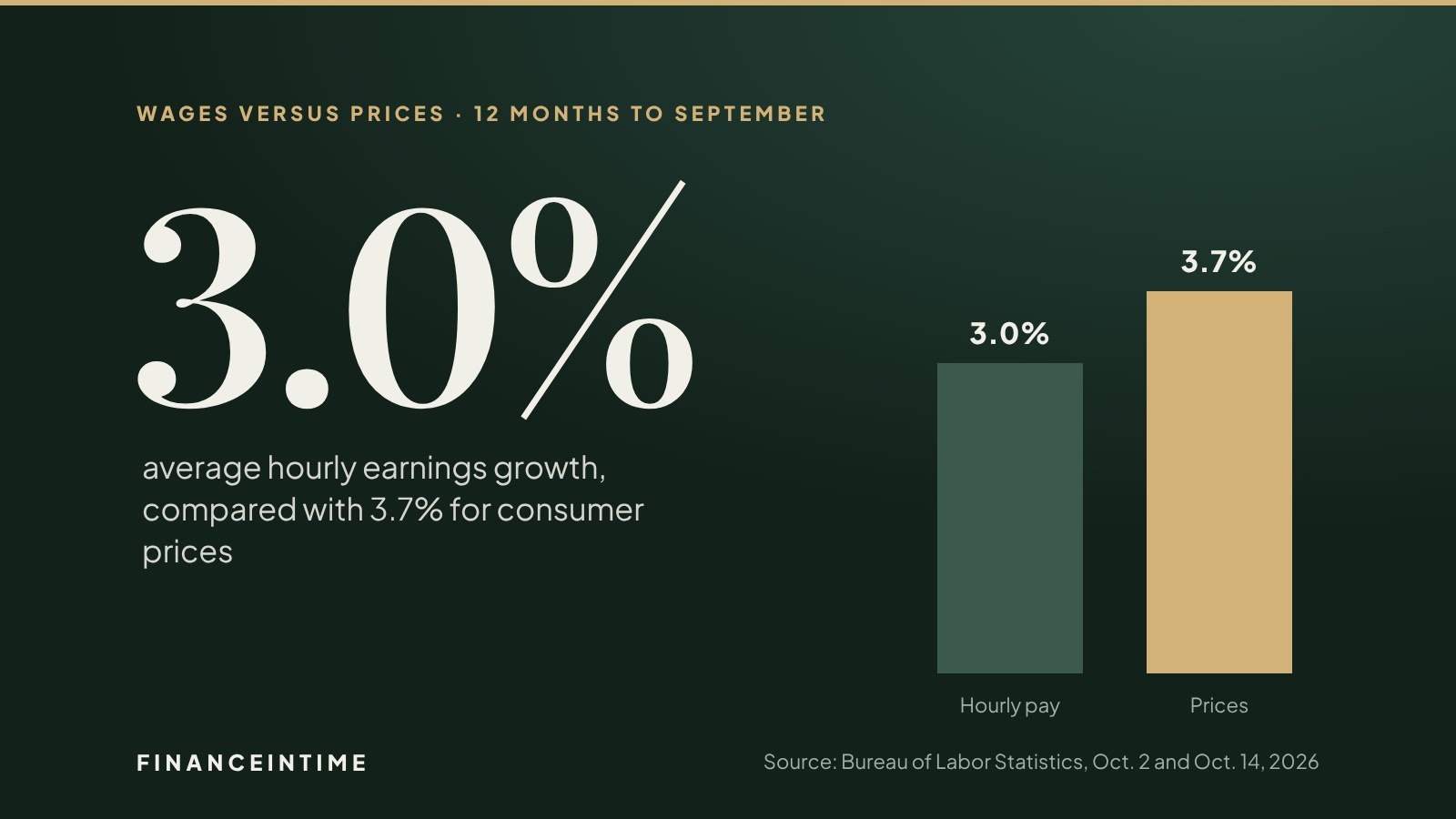
The Federal Reserve goes into its October 27-28 meeting with annual consumer price inflation at 3.7%, up from 3.4% a month earlier, according to the Bureau of Labor Statistics, and with most officials saying in September that another rate increase would likely be appropriate by the end of the year.
What happened
At its September 15-16 meeting, the Federal Open Market Committee raised the target range for the federal funds rate by 1/4 percentage point to 3.75%-4.00%, from 3.50%-3.75% (computed), in a 12-0 vote, according to the Fed's statement. Chairman Kevin Warsh was among those voting in favor, according to the minutes.
The statement described an economy that "is expanding at a solid pace," with "domestic spending" that "has been resilient." It said "productivity growth is strong, and capital investment is robust," and that "uncertainty remains elevated owing, in part, to geopolitical developments." On prices, it said: "Inflation remains elevated. Today's policy action will support a timelier return to the Committee's 2 percent goal. The Committee will deliver price stability."
The minutes, released on October 7, gave more detail on the discussion. All participants supported the increase, and "most participants assessed that another increase in the target range for the federal funds rate would likely be appropriate by year end." The minutes also said participants "approached each meeting with an open mind and decisions at future meetings would depend on incoming information and its implications for the outlook and the balance of risks."
"Many participants emphasized that a higher path for the target range would be prudent on risk-management grounds," the minutes said, "providing insurance against inflation remaining persistently above target due to stronger-than-expected demand or further adverse supply shocks."
The numbers behind it
The data released since the September meeting point in two directions.
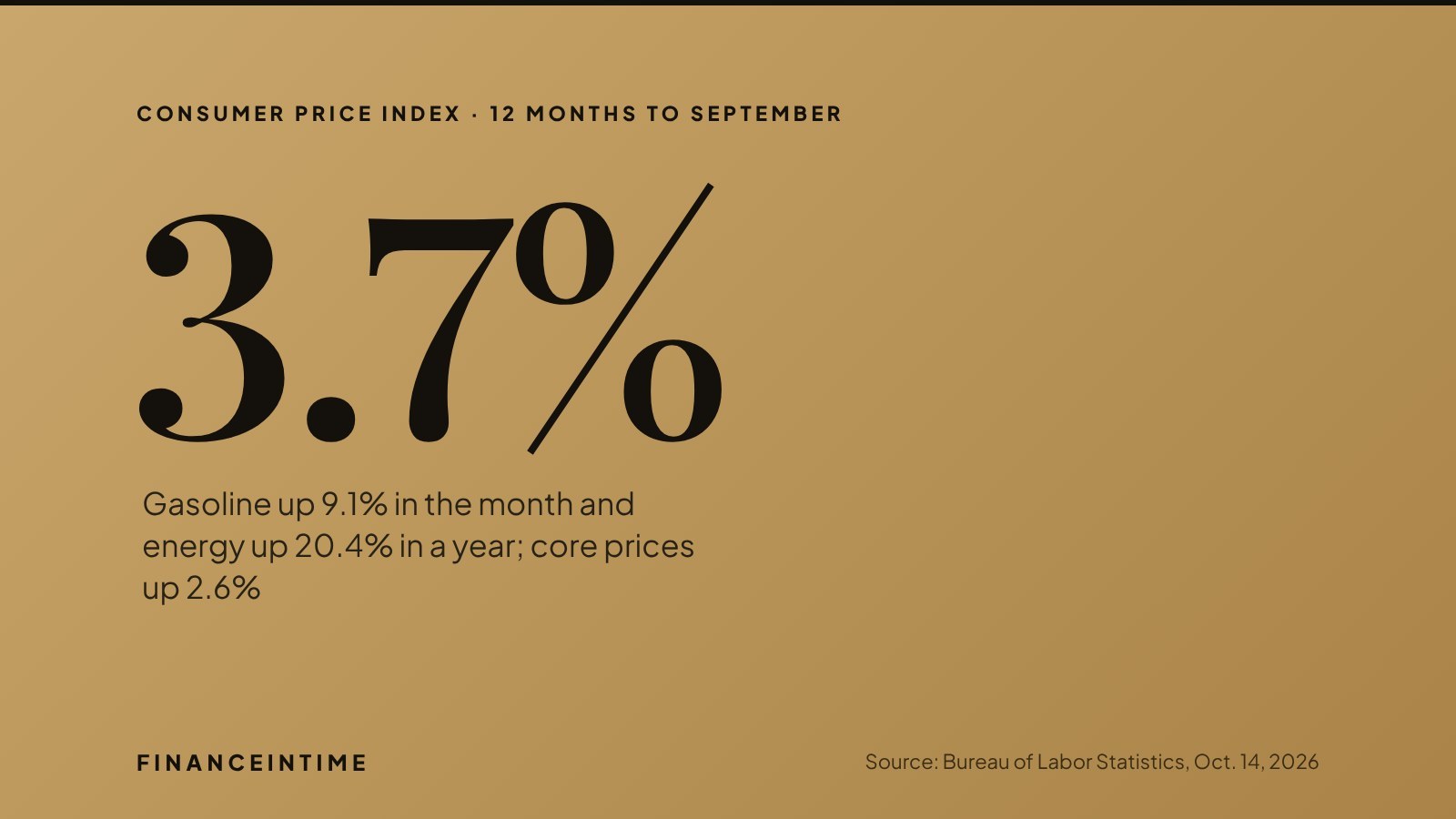
Prices. The consumer price index for all urban consumers rose 0.6% in September on a seasonally adjusted basis, after rising 0.4% in August, the BLS said on October 14. Over the 12 months through September, the index rose 3.7% before seasonal adjustment, compared with 3.4% in the 12 months through August.
Energy drove much of the increase. The gasoline index rose 9.1% in September, "accounting for over half of the monthly all items increase," the BLS said. Energy prices were 20.4% higher than a year earlier, and gasoline was 34.2% higher.
Core prices, which exclude food and energy, rose 0.3% in September, the same as in August. The annual core rate was 2.6%, up from 2.4% in August.
Other parts of the report were mixed. The shelter index, which measures housing costs, rose 0.4% in September and was 3.2% higher than a year earlier. Prices of services other than energy rose 3.1% over the year. The food index was unchanged on the month and rose 2.5% over the year, and used cars and trucks rose 0.7% on the month but were 1.5% lower than a year earlier.
Jobs. Employers added 29,000 jobs in September and the unemployment rate was 4.2%, according to the BLS employment report released on October 2. The agency said the unemployment rate "has remained in a narrow range of 4.1 percent to 4.3 percent since March."
The Fed's minutes described a labor market that "appeared to be near full employment, with some signs of strengthening."
What the Fed said about energy
Higher energy prices are part of the Fed's discussion. The minutes said asset prices over the intermeeting period were affected by "an escalation of geopolitical tensions that pushed up energy prices," and "a couple of participants" said a higher policy rate would help keep "sector-specific price increases stemming from energy market disruptions and AI-related demand" from broadening out into more persistent inflation.
That is a different argument from the one for raising rates in response to strong demand. The minutes show both views among participants: "many" cited risk management, while "a number of participants viewed a higher path for the target range as necessary based on their modal outlooks rather than on risk-management grounds."
What markets show
Yields on shorter-dated Treasuries remain above the Fed's target range. The 2-year Treasury yield closed at 4.65% on October 22, 0.65 percentage point above the top of the range (computed), according to Treasury Department data. It had been 4.81% the day before.
The 10-year yield fell to 4.96% on Thursday from 5.13% on Wednesday. Yahoo Finance reported that the move came as investors worried about a slowdown in spending on artificial intelligence infrastructure.
Scenarios
The Fed has not said what it will do on October 28, and the outcomes below are conditional, not forecasts.
- If inflation data keep surprising to the upside, the view recorded in the minutes, that another increase would likely be appropriate by year end, would remain in place. October 27-28 and December 8-9 are the last two meetings on the Fed's 2026 calendar.
- If energy prices ease and core inflation cools, officials could keep the range unchanged while they wait for more data. The minutes said decisions would depend "on incoming information."
- If growth slows more than expected, the committee's view that the labor market is near full employment, with risks "broadly balanced," could change. The September jobs report showed 29,000 added jobs, a small number.
Market pricing for the meeting changes with each data release.
What to watch
- October 27-28: FOMC meeting, with the statement released on the second day.
- November 6, 8:30 a.m. ET: BLS employment report for October, according to its release schedule.
- November 10, 8:30 a.m. ET: BLS consumer price index for October, according to its CPI schedule.
- December 8-9: The next FOMC meeting, which the Fed's calendar marks as one with a Summary of Economic Projections.
Sources
- Federal Reserve issues FOMC statement, September 16, 2026 — Federal ReservePrimary source
- Minutes of the FOMC, September 15-16, 2026 — Federal ReservePrimary source
- Consumer Price Index - September 2026 — U.S. Bureau of Labor StatisticsPrimary source
- The Employment Situation - September 2026 — U.S. Bureau of Labor StatisticsPrimary source
- Daily Treasury Par Yield Curve Rates — U.S. Department of the TreasuryData
- FOMC calendars — Federal ReservePrimary source
- Employment Situation release schedule — U.S. Bureau of Labor StatisticsPrimary source
- CPI release schedule — U.S. Bureau of Labor StatisticsPrimary source
- Stock market today: Thursday, October 22 — Yahoo FinanceSecondary source
More in Economy
View All Economy